Often wooded lots command a premium price compared to treeless lots in a nearby location. However if proactive measures are not taken during new construction to protect individual trees, many trees will suffer root damage, and subsequently decline and die within three to ten years after construction activities began. I’ve delivered the bad news to many new home owners when their trees have been unnecessarily and irreversibly damaged. Not only is an irreplaceable mature tree lost, but the cost of removal is usually high for a large tree growing close to your home. Preserve your valuable trees by involving a knowledgeable and skilled arborist early and throughout the construction process.
Types of Damage
Trees can be irreversibly damaged in many ways by bulldozers, excavators, and common construction activities that tear, smother, or poison the roots, compact the soil, break branches, strip away bark, and alter the tree’s exposure to wind and sun.
Trenching for irrigation systems is a common cause of tree decline and death. Most fine, absorbing tree roots are located in the top twelve inches of the soil. A trench inside a tree’s root zone can easily cause irreversible damage that may not cause visible decline for several years. Tunneling techniques can be used where necessary to avoid damaging critical roots.
Planning Phase
The first step in any tree preservation plan should include a comprehensive tree inventory that identifies which trees should be retained. Trees vary greatly in their ability to survive construction activities. We have to consider species, size, age, location, health, structural condition and aesthetics of each tree. For example, a live oak can tolerate root damage that would easily kill an American beech or a yellow-poplar.
It’s imperative that we work with the architect and the builder during the planning phases. Many times a small change in the plans can make the difference in the survival of an important specimen tree. Only when we know where buildings, driveways, walkways and utilities will be placed can we decide if a particular tree can be preserved. Sometimes small plan changes make it possible to preserve a tree that would otherwise need to be removed.
A Tree Protection Zone (TPZ) must be established to protect each tree’s Critical Root Zone (CRZ). The TPZ will depend upon many factors which include the species and size of the tree as well as the building plans and the need for equipment access. The TPZ needs to be established by a skilled and experienced arborist with a record of successful tree preservation.
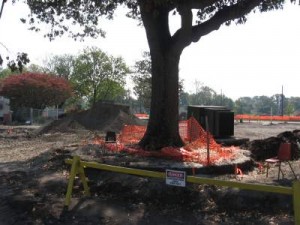
Contractors ignoring flimsy tree protection fencing
September 2007
Construction Phase
Sturdy tree protection fencing must be installed around the perimeter of the TPZ. Plastic construction fencing is a poor choice because it is easily moved and destroyed by construction activities. We recommend chain-link fence that is at least 4 ft. tall. All fencing should be clearly marked with signage alerting construction personnel to the TPZ. No digging, trenching, driving, burning, storing of materials, or toxic fluids should be permitted in the TPZ. Fines and penalties for violating the TPZ should be built into the job specifications.
An arborist should communicate with construction personnel about the importance of respecting the TPZ. Regular site visits are necessary to ensure compliance. The photos below reveal the fate of the tree shown above. It will typically cost more to remove a tree than it will to protect it properly.
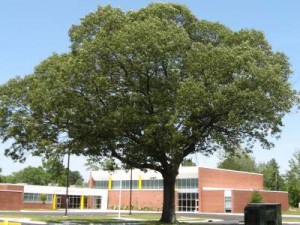
Oak appears healthy post-construction
May 2008
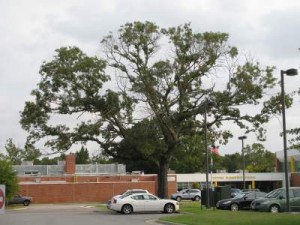
Oak in severe decline
September 2013
Post Construction Phase
In spite of the best preservation efforts, some trees will still be stressed by construction activities. Good post-construction maintenance practices ensure proper irrigation and prescription fertilization that meets your trees’ nutrient demands. Good cultural practices that add organic matter to the soil and maintain good soil structure will create conditions that benefit your trees and add beauty and shade to your property.
